Electric vehicles reward precision. You feel it in the silent surge from a stoplight, the way regenerative braking smooths city traffic, the whisper-quiet cabin that turns a commute into a cocoon. That same demand for exactness carries into the most overlooked luxury feature on any car: the glass. On an EV, auto glass is no longer just a view to the world. It is an acoustic shield, a thermal manager, a sensor hub, and often a keystone for the structural rigidity of the body. Replacing it is not a commodity task. It is a craft that blends materials science with careful software calibration.
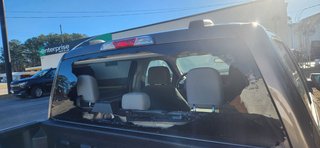
I have spent years working with high-end vehicles that wear more technology in their windshields than most laptops. EVs pushed that curve quickly. The first time I replaced a Tesla Model X windshield, I remember two things: the weight of the panoramic glass that runs far up the roofline, and the quiet click of a correctly calibrated camera array on the test drive. Both moments had the same feeling as a finely fitted suit, where every seam has to lie without tension.
This guide is not meant to scare you off necessary service. It should help you navigate it well, from the quoting process to the first rainy night after the replacement. If you are weighing repair versus replacement, if you are choosing between mobile service and a certified shop, or if you are simply curious why EV glass can cost more, you will find clear answers here.
Why EV windshields are not just “windshields”
Auto Glass on modern EVs carries more responsibility than on a basic commuter car built a decade ago. Start with the structure. Many EVs rely on their windshield bond line to help manage torsional rigidity, because the battery pack’s mass and low center of gravity change how the body flexes. Cabin acoustics shift too. Electric drivetrains remove engine noise, which makes wind flutter and road hiss more noticeable. Manufacturers compensate with thicker laminated glass, acoustic interlayers, and precise seals. Finally, there is the technology: heads-up displays, rain and light sensors, infrared coatings, and suites of cameras and radar behind the mirror mount, all aligned to the glass curvature and optical clarity.
That last detail, the curvature, matters more than most realize. A camera that misreads a lane line by a few centimeters at the base of the windshield might drift by half a meter at the horizon. Optical distortion introduced by off-spec glass or sloppy installation becomes a safety issue, not just a quirk. When you read an invoice for EV Windshield Replacment and wonder why it costs more than your neighbor’s minivan, these are the reasons.
Repair or replace, and how to decide
The first judgment call is whether Windshield Repair is safe and sensible. Resin injection for chips and small cracks still works beautifully on EVs, but the tolerance is tighter. Camera fields of view often sweep the upper-middle portion of the glass. If a chip sits within that zone, repair can leave a small optical artifact that a human driver ignores but a camera may not. I have approved repairs up to nickel size and short cracks under 6 inches, provided they sit outside sensor sweeps and HUD projection areas. Anything intersecting the path of a forward camera, LiDAR, or heater grid demands extra scrutiny. A repair saves money and time, and on EVs it preserves calibration, but not at the cost of sensor reliability.
Thermal coatings introduce another wrinkle. Several EV windshields carry a metallized or IR-reflective layer to keep cabins cooler. Heat-absorbing glass can be sensitive to aggressive curing lamps used in some repair processes, which is why a seasoned technician moderates temperatures and uses resins compatible with coated laminates. When in doubt, ask to see the resin’s technical sheet and the curing method. A proper shop will not hesitate.
If replacement is necessary, prioritize OEM or tier-one glass from a supplier that matches the original optical spec. The phrase “OEM equivalent” gets thrown around carelessly. What you want is glass with the exact bracket geometry, camera windows, HUD-ready wedge, acoustic interlayer, and thermal coating. A missing bracket might be fixable, but a missing or wrong optical wedge in a HUD windshield makes the image double or blur. That is not a defect you can tune out.
The hidden complexity of calibration
On a text-only quote, the word “calibration” looks like a line item. In reality, it is a process with multiple stages, and on some EVs it is mission critical. After Auto Glass Replacement on an EV with Advanced Driver Assistance Systems, expect both static and dynamic calibrations. Static calibration aligns cameras and sensors to target boards or patterns while the car sits on a level surface. Dynamic calibration verifies that alignment on the road, sometimes requiring specific speeds and lane markings.
Different brands behave differently. A Tesla can self-calibrate during a drive after Port Royal auto glass shop a windshield replacement, but it still expects the glass to be within optical spec. A Rivian requires a guided procedure, and a Lucid’s forward camera set can be surprisingly sensitive to ambient light during calibration. European EVs usually follow established ADAS protocols similar to their gas-powered siblings, but with additional caution around radar and driver monitoring cameras. The subtle part is that calibration assumes correct glass thickness, curvature, and bracket placement. That is why “close enough” never is.
Shops that treat calibration as an afterthought often outsource it to mobile vendors. Outsourcing can work if the vendor is equipped with current software, OE targets, and a level floor. I have seen flawless results in a well-lit warehouse and dreadful results in a sloped parking lot. Ask where the calibration will be performed, what equipment will be used, and whether a pre-scan and post-scan report will be provided. You want a scan that documents trouble codes, successful calibrations, and software versions.
Power, safety, and high-voltage etiquette
The battery pack may be under the floor, but it dictates how you handle the car from the moment you open the door. Before removing an EV windshield, a careful technician powers down the vehicle properly and isolates circuits related to airbags, cameras, and rain sensors. On some models you must wait for modules to go to sleep, which can take 5 to 15 minutes after doors are closed and key fobs are out of range. Skip that, and you might trigger a fault or, worse, an unintended wiper sweep while a blade is off the glass.
High-voltage safety rarely becomes a direct concern during Auto Glass Replacement because the work sits in the low-voltage ecosystem. Even so, techs trained on EVs follow simple habits: insulated tool choices where appropriate, no heat guns near high-voltage harnesses running up A-pillars, and never drilling or riveting into unknown cavities. On high-end EVs with roof-integrated antennas or solar panels, trace wiring routes before prying trim. Heat-damaged harnesses are an expensive mistake, and they often do not declare themselves until days later.
The dance with adhesives: chemistry, cure times, and squeaks
The urethane adhesive bead is the unsung hero. It holds the windshield like a glued rib in a composite hull, absorbing stress and keeping water and wind out. EVs usually specify high-modulus, crash-approved urethanes that hit a certain tensile strength within a safe drive-away time, often 30 to 90 minutes under ideal temperature and humidity. Cabin humidity, cold weather, and even the porosity of the pinch weld change cure behavior. A premium shop measures and adapts, because a glass that shifts a millimeter before cure can throw a camera off.
Surface preparation sounds unglamorous, but that is where luxury lives. The best installations start by removing the old urethane to a prescribed thickness, prepping the pinch weld with the correct primer, and using setting devices that place the glass right on the manufacturer’s datum points. On EVs with acoustic glass, squeezing the interlayer by over-tightening clamps can create a “drum” that rattles or a hum at highway speed. The fix is methodical: even pressure during set, verified seating, and a quick visual for uniform bead squeeze-out without voids.
Squeaks and creaks often trace back to trim clips and A-pillar covers. Many EVs use unique clip designs for crash performance and side-curtain airbag deployment. Reusing tired clips invites noise. When I price a Windshield Replacment on a premium EV, I include new clips, cowl seals, and any one-time-use retainers. It costs a bit more up front and saves the unpleasant callback.
No small thing: acoustic comfort and thermal control
Silence is the first luxury. EV buyers notice cabin noise more than owners of old V8 sedans because there is no engine to mask wind edges and tire textures. Acoustic windshields, often labeled “laminated acoustic,” sandwich a polyvinyl butyral layer that dampens specific frequencies. The trick is the interlayer recipe and thickness, which the automaker tuned for that car’s body resonance. A non-acoustic aftermarket glass might look identical and still make the cabin two to three decibels louder at 70 miles per hour. That is the difference between a whisper and a faint hiss. If your EV came with acoustic glass, insist on the same specification for replacement.
Thermal coatings matter in sunbelt states. Infrared-reflective layers keep cabins cooler and reduce strain on the HVAC system, which in an EV protects range. Not all coatings play nicely with toll tags or dash-mounted devices. OEM glass often has a dotted or shaded “communication window” where signals pass. Cheap glass sometimes misses this detail. If you live with toll roads, check your current windshield for that clear zone and make sure the replacement mirrors it.
Panoramic, fixed, and roof glass on EVs
Look up. Many EVs celebrate glass roofs, from Tesla’s sweeping panels to Mercedes EQ models with dimmable systems. Replacing roof glass is a different project than a windshield. The panels are heavier, the bonding area can be larger, and access often requires interior trim removal that brushes past airbags and headliners. It is not a mobile driveway job. Temperature management is key because the roof panel expands and contracts heavily in sun and shade. A correct bond line gives the glass room to breathe without cracking seals.
Some roofs use electrochromic layers or embedded antennas. Those panels must be handled with exact voltage precautions and stored correctly before install. If the vehicle has a moisture sensor array for smart climate control that references roof temperature, power it down and recalibrate after the swap. The only time I have seen a newly replaced roof glass fog more than the original was when a sensor was left floating in a trim piece. The car assumed a microclimate that did not exist and overcompensated.
Mobile service vs. controlled shop environment
There is a romance to a cleanly executed mobile service. For simple windshields on simple cars, a skilled tech can do outstanding work in a driveway. For EVs, conditions and tooling tip the balance toward a controlled shop. Calibration targets need space and a level floor. Lighting should be consistent. Ambient temperature should live in the adhesive’s sweet spot. Even the cowl plastic on some EVs re-seats better when warmed slightly, which a shop can do precisely.
When a client insists on mobile service, I ask three questions: is there a garage with good lighting and a reasonably level surface, can we maintain a clean perimeter free of dust and leaves for two hours, and will the weather hold steady above the adhesive’s minimum temperature? If the answer to any of these is no, a shop visit preserves quality. Luxury is not just the material, it is the control of variables.
Insurance, costs, and honest expectations
Premium EV glass is expensive. Depending on the model, a windshield with acoustic interlayer, IR coating, HUD wedge, and a camera bracket can cost 1,000 to 2,500 dollars before labor. Roof panels can exceed that. Insurance often covers Auto Glass Replacement with varying deductibles, and some policies treat glass as a separate category to preserve your comprehensive claim history. Supply matters too. On popular EVs, OEM glass is generally available. On niche models or new releases, lead times can stretch to weeks. Good shops will temporary-seal a crack to keep moisture out while you wait.
If a quote seems dramatically lower than others, ask what is being omitted. Are sensors being calibrated or simply “relearned” by driving? Is the cowl seal included? Are one-time clips being replaced? Will there be a post-replacement OBD scan? The cheapest invoice often leaves out the invisible steps that keep everything quiet, aligned, and dry.
The role of software updates
Glass and software meet more often than you might expect. After windshield replacement and calibration, some EVs benefit from a software update or at least a module reset. The reason is simple: the car remembers prior calibration values and some systems become conservative if they see mismatches. I have seen lane centering behave timidly until a reset helps the module accept new baselines. If your car offers over-the-air updates, check if there is one pending around the time of service. It can be smart to install it after the calibration, not before, to avoid version mismatches between the service tool and the car.
HUD alignment deserves special mention. Many EVs and hybrids now project speed, navigation prompts, and ADAS alerts onto the lower windshield. Replacement glass must carry the correct optical wedge. After installation, the image may sit slightly high or low. Most vehicles offer limited software adjustment for vertical offset. Skilled techs will verify this during the final drive and nudge it within spec. If they cannot get it perfect, the glass spec may be wrong even if the part number looks close.
Water testing, wind noise checks, and the first week
A good installation ends with two rituals: a controlled water test and a drive at highway speed. The water test uses a specific flow and pattern to confirm that glass edges, corners, and cowl interfaces are watertight without overwhelming drain channels. The highway test listens for edge whistle, mirror vortex noise, and any odd resonance from the dash or A-pillars. EVs magnify tiny noises that ICE cars mask, so a technician should expect to make small adjustments like reseating an A-pillar trim or replacing a cowl clip on the spot.
For the first week, treat the bond like fresh leather. Avoid slamming doors hard, which pressurizes the cabin and can stress a green urethane bead. Do not run an automatic car wash that uses aggressive brushes and high-pressure jets right at the glass edges. Leave window tinting or windshield film application for after the adhesive has fully cured, which in most climates means a few days. If you hear a new rattle, do not assume it is normal. Call the shop. The right response is a polite inspection, not a shrug.
What to ask when you book an EV glass appointment
You do not need to become an expert to get excellent service. A handful of precise questions will reveal whether a shop understands the nuances of EV Auto Glass.
- Do you use OEM or tier-one glass with the correct acoustic and thermal specifications for my exact trim, and will the part include all camera brackets and HUD features? Where will calibration be done, with what targets and scan tools, and will I receive pre-scan and post-scan reports? What urethane and primers will you use, what is the safe drive-away time for my conditions, and how do you control temperature and humidity? Are cowl seals, A-pillar clips, and any one-time-use fasteners included in the quote, and will you water test and perform a highway noise check before delivery? If mobile service is proposed, how will you ensure a level surface, proper lighting, and a clean environment for both installation and calibration?
That might be the only list you need. Everything else flows from the answers.
Edge cases that separate competence from luck
Every craft has stories that turn into cautionary tales. I once saw a nearly new EV arrive with a perfect-looking aftermarket windshield that made the driver nauseated. The optical distortion was subtle, the kind that arcs the horizon like a fisheye lens. Cameras calibrated fine, but human eyes protested. The solution was OEM glass with a tighter spec on the PVB interlayer. Another time, a beautifully installed windshield kept fogging in one corner after rain. The culprit was not the bond. It was a misaligned cowl drain, barely kinked, that backed water into a seam. A ten-minute fix, but only after a meticulous recheck.
On a luxury EV with a wide, thin dashboard, a faint tick appeared at 60 miles per hour after replacement. It took three drives to find it. The new A-pillar trim clip, an updated part from the manufacturer, had a fractionally taller shoulder that pressed a wiring harness against the pillar. One wrap of felt tape, problem solved. None of these are dramatic, and that is the point. The difference between an acceptable job and an excellent one shows up in small quiet victories.
Sustainability and the glass you leave behind
Owners choose EVs for many reasons, including sustainability. It is worth asking what happens to the old glass. Windshields are laminated, which complicates recycling. Quality shops partner with recyclers who separate glass from interlayers and reuse material in secondary products like fiberglass insulation or glass beads for roads. It is not universal, but the industry has moved. If your shop recycles, that is a mark in its favor, and it aligns with the EV ethos.
Repair over replacement remains the greenest choice when safe. Resin repair keeps a windshield out of the waste stream and preserves the original optical alignment. That said, a marginal repair that degrades ADAS performance is not a sustainable win. Good judgment is sustainable practice. A glass that helps your cameras read the world correctly prevents collisions. Few things are more eco-friendly than avoiding a crash.
When aesthetics meet engineering: the luxury standard
Luxury is not only materials and price points. It is the feeling of an object working with you, quietly and exactly. In the context of Auto Glass Replacement on EVs, luxury shows up in the absence of drama. The installer arrives prepared, the part fits perfectly, the calibration clears without coaxing, and the test drive is a return to silence. Rain beads and rolls away cleanly. The HUD floats where your eyes expect it. Your lane-centering confidence picks up where it left off.
Achieving that result takes rigor. Choose a shop that does not treat glass as generic. Ask for the details that matter. Approve the parts that preserve your car’s acoustic and thermal character. Respect the adhesives and cure times. Plan for calibration with the same seriousness as a brake job. Expect documentation and keep it with your service records, especially if you lease or plan to sell the vehicle. A future buyer who sees careful records reads them as a promise about the rest of the car.
EVs deserve nothing less. When the day comes that a stray stone finds your windshield on the highway, you will know what excellence looks like, and you will hear it too, in the soft hush that returns when the job is done right.